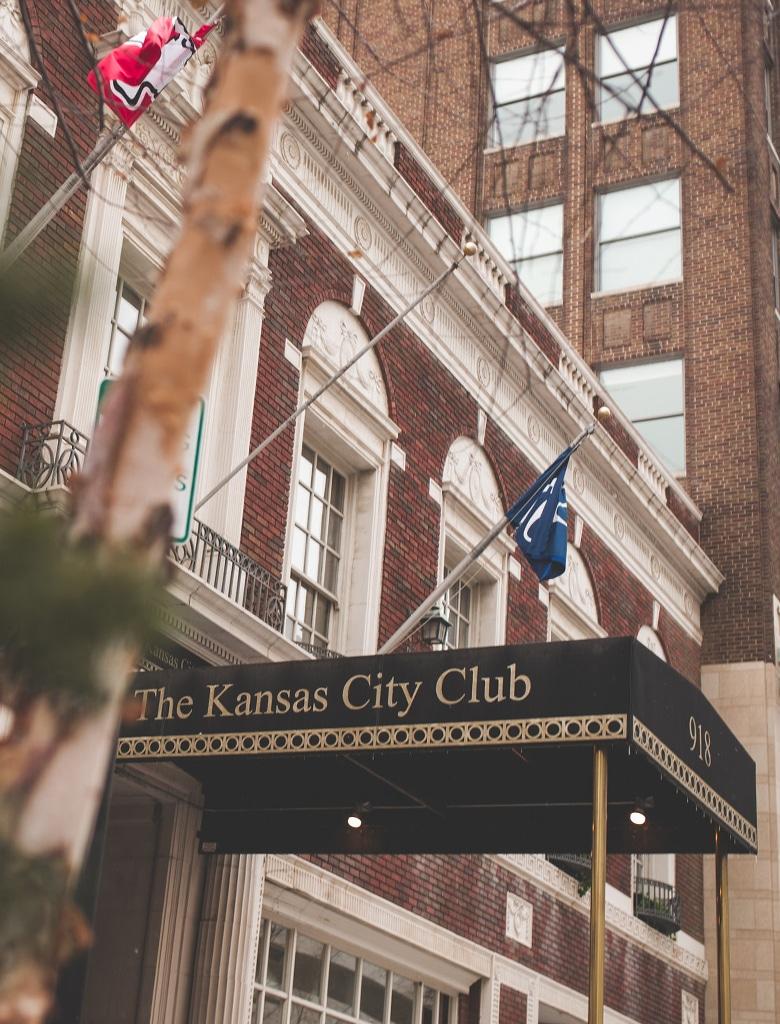
The historic Kansas City Club in downtown Kansas City.
Since the earliest days of this great country, Americans have come together to form clubs for fun and fellowship. Private clubs have always been the venue of choice for building high-quality relationships, networking, and entertaining. Private club members represent a wide variety of industries and professions, including CEO’s, business owners, executives, and professionals.
The roots of the American Club Association (ACA) are deeply embedded in the grand tradition of America’s most prestigious social and civic institutions. Originally established as an association of elite golf, tennis, city and country clubs worldwide, the ACA headquarters were located at the historic Kansas City Club.
A Foundation of Purpose
Founded on November 10, 1882, the Kansas City Club was born out of a desire for a new kind of leadership. The Kansas City Club was built by a group of prominent businessmen as a more inclusive, civic-minded alternative. It quickly became the heartbeat of the region's economic landscape - a hub where influential leaders gathered to cultivate the social and professional associations that would shape the future.
Grandeur and Influence
As the club’s influence grew, so did its skyline. After years of meeting in grand hotels, the club moved into its first official home in 1888. By 1922, its explosive growth led to the construction of a 15-story Gothic Revival skyscraper at 13th and Baltimore Avenue. This architectural marvel was the pinnacle of luxury, boasting 160 private hotel rooms, a bowling alley, and a 13th-floor swimming pool. By the 1980s, membership peaked at over 2,000 with General Manager, Stephen Joyce, and its roster read like a "who’s who" of American history - counting Presidents Harry S. Truman and Dwight D. Eisenhower, General Omar Bradley, and local billionaires like Ewing Kauffman among its members.
The Tradition Continues
After 130 years of hosting the nation's most influential leaders, the Kansas City Club closed its doors. However, its mission was too important to end there. To honor and keep this long-standing tradition of excellence alive, the Board launched the ACA Business Club concept. Today, the ACA Business Club carries that torch forward. We remain a private club dedicated to serving executives, professionals, and entrepreneurs who believe in the power of building lasting, valuable relationships.
-Private Club List-
In addition to the ACA Business Clubs, the American Club Association (ACA) endorses the following Leading Private Clubs.
Notable Kansas City Club Members
General Omar Bradley
General Omar Bradley (1893–1981) was a premier U.S. Army commander of World War II, famously known as the "Soldier’s General" for his modest demeanor and genuine concern for his troops. A graduate of the West Point "class the stars fell on" alongside Dwight D. Eisenhower, Bradley rose from humble beginnings in Missouri to become the only Chairman of the Joint Chiefs of Staff to attain five-star rank.
During World War II, Bradley led the 12th Army Group in Europe, the largest American force ever commanded by a single field officer, numbering 1.3 million men. He played a pivotal role in planning and executing the D-Day landings at Omaha and Utah beaches and oversaw the subsequent breakout from Normandy into Germany.
After the war, he reformed the Veterans Administration and served as the first Chairman of the Joint Chiefs of Staff during the Korean War. He was the last person in U.S. history to be promoted to General of the Army and concluded a record-breaking 69-year military career.
President Harry S. Truman
Harry S. Truman (1884–1972) was the 33rd President of the United States, serving from 1945 to 1953. Born in Missouri, he was a farmer and a decorated artillery captain during World War I before entering politics. Known for his "plainspoken" manner and the famous sign on his desk that read "The Buck Stops Here," he ascended to the presidency following the sudden death of Franklin D. Roosevelt, having served as vice president for only 82 days.
During his first months in office, Truman made the momentous decision to use atomic weapons against Japan to end World War II. His presidency thereafter was defined by the start of the Cold War and the implementation of the "containment" policy to stop the spread of communism. He was the architect of several cornerstone global institutions and programs, including the Marshall Plan to rebuild Europe, the Truman Doctrine, and the formation of NATO.
On the domestic front, Truman was a pioneer for civil rights, issuing executive orders to desegregate the U.S. Armed Forces and the federal workforce in 1948. Despite facing low approval ratings and a divided party, he secured a legendary upset victory in the 1948 election against Thomas E. Dewey. He also led the United States into the Korean War to defend South Korea from communist invasion.
Truman retired to his home in Independence, Missouri, where he lived a modest life and oversaw the construction of his presidential library. His financial situation as a former leader was so humble that it prompted Congress to pass the Former Presidents Act, establishing a pension for all future ex-presidents. Although he left office as one of the most unpopular presidents of the 20th century, historians today consistently rank him as one of the ten greatest presidents for his decisive leadership during global crises.
President Dwight D. Eisenhower
Dwight D. "Ike" Eisenhower (1890–1969) was a five-star general and the 34th President of the United States, serving from 1953 to 1961. Born in Texas and raised in Kansas, he graduated from West Point in 1915 - the same "class the stars fell on" as Omar Bradley—and quickly became known for his exceptional organizational talent and ability to harmonize conflicting personalities among Allied leaders.
During World War II, Eisenhower rose to become Supreme Allied Commander in Europe, where he orchestrated the monumental D-Day invasion of Normandy in 1944. His leadership was defined by a calm, steady hand and a willingness to take full responsibility for the momentous decisions that led to the liberation of Europe and the final defeat of Nazi Germany.
As President, Eisenhower guided the nation through eight years of relative peace and economic prosperity. He championed the creation of the Interstate Highway System, the largest public works project in American history, and established NASA in response to the Soviet launch of Sputnik.
In his farewell address, Eisenhower famously warned against the "unwarranted influence" of the military-industrial complex, reflecting his lifelong belief in balancing national security with a stable economy. He retired to his farm in Gettysburg, Pennsylvania, and remains highly regarded by historians for his strategic leadership during both global war and the high-tension years of the Cold War.
Ewing Kauffman
Ewing Marion Kauffman (1916–1993) was a pharmaceutical pioneer, philanthropist, and the founding owner of the Kansas City Royals. After serving in the U.S. Navy during World War II, he famously started Marion Laboratories in his basement with just $5,000. By focusing on innovative salesmanship and employee profit-sharing, he grew the firm into a multi-billion-dollar global giant, turning hundreds of his associates into millionaires along the way.
In 1968, Kauffman returned Major League Baseball to Kansas City by establishing the Royals, a team he guided to a World Series championship in 1985. Known to fans as "Mr. K," he was celebrated for his unique commitment to the community, even creating a succession plan to ensure the team remained in Kansas City after his death. In 2026, his namesake, Kauffman Stadium, remains a cornerstone of the city's sports culture, currently undergoing field modifications to remain competitive for the upcoming season.
Kauffman’s most enduring legacy is the Ewing Marion Kauffman Foundation, established in 1966 to foster entrepreneurship and improve education. It remains one of the largest private foundations in the U.S., with its strategic priorities focused on closing economic mobility gaps and scaling workforce development programs in the Kansas City region. His belief in "giving back" continues to shape the city's identity through major landmarks and ongoing philanthropic support for new generations of dreamers.